
 Mark
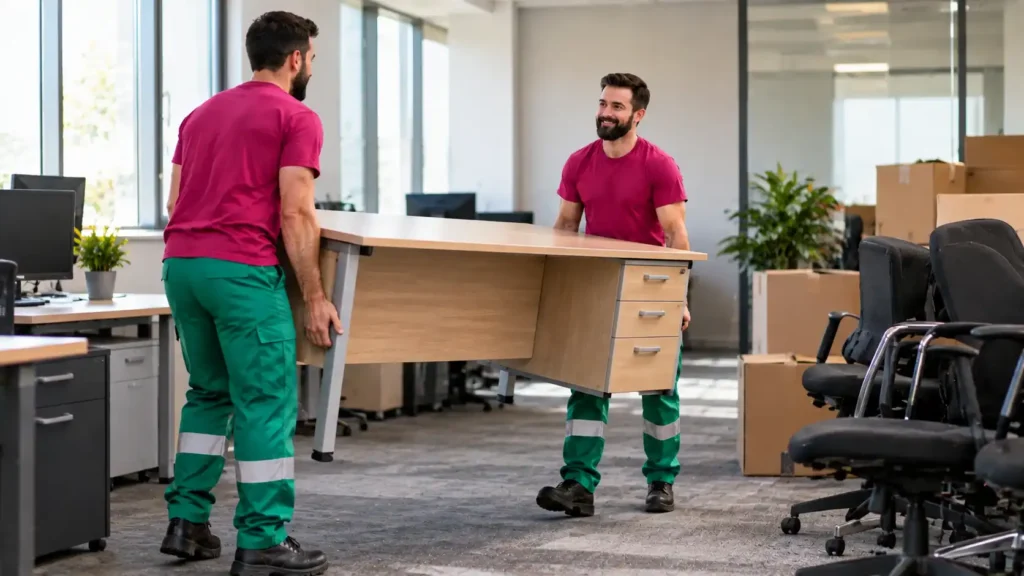
The best way to dispose of old desks and office chairs depends on their condition, quantity and whether they are coming from a home office or commercial workplace.
If the furniture is still usable, reuse, resale or donation should normally be considered before disposal. If desks and chairs are damaged, broken or no longer suitable for use, they can usually be collected by a professional office clearance or rubbish removal company and taken for appropriate recycling, recovery or disposal.
For businesses, there is another important consideration: old office furniture is generally business waste, so it cannot simply be left on the street, placed beside communal bins or handed to an unverified collector.
Businesses in England have a legal duty to keep waste to a minimum by considering prevention, reuse, recycling and recovery before disposal. They must also ensure that anyone taking their waste is authorised to do so.
For offices in Fulham SW6, professional collection can be particularly useful when clearing multiple desks, chairs, storage cabinets and other bulky workplace furniture at the same time.
What Should You Do With Old Office Furniture First?
Before arranging disposal, separate your furniture according to its condition.
A useful approach is to divide it into three groups:
- Furniture that can still be used
- Furniture that could be repaired or recycled
- Furniture that genuinely needs disposal
A desk with a few scratches may still be perfectly usable, while an office chair with a broken mechanism or damaged frame may have little practical reuse value.
Doing this before an office clearance can reduce the amount of material entering the waste stream and may also reduce the size and cost of the collection.
Can Old Desks and Office Chairs Be Reused?
Yes, and reuse is usually one of the best options when furniture remains safe and functional.
Businesses frequently replace desks and chairs because of an office refurbishment, relocation, branding change or new layout rather than because the furniture is unusable.
Older office furniture may therefore still be useful to:
- Small businesses
- Start-ups
- Community organisations
- Charities
- Schools or clubs
- Home-office users
Businesses can also sell suitable furniture through second-hand marketplaces or specialist office-furniture dealers.
The UK waste hierarchy places prevention and reuse ahead of recycling and disposal, so keeping usable furniture in circulation is preferable where practical.
Can Office Furniture Be Donated?
Usable desks and chairs may be accepted by charities, reuse organisations or community projects.
However, acceptance policies differ significantly.
A charity may refuse furniture because:
- It does not have enough storage
- The item is damaged
- Upholstery is badly stained
- Collection is unavailable
- The furniture is too large
- There is little demand for the item
For large office clearances, donating everything may therefore not be practical.
A more efficient approach can be to identify the best reusable furniture first and arrange professional clearance for the remainder.
Can Old Office Desks Be Recycled?
Many desks contain materials that can potentially be recovered or recycled.
Depending on their construction, this may include:
- Timber
- Chipboard
- Metal frames
- Steel legs
- Aluminium components
- Plastics
- Cardboard components
However, recycling an entire assembled desk is not always as straightforward as placing it in a normal recycling container.
Large furniture may need to be dismantled or processed at an appropriate waste facility where its different materials can be separated.
A professional office waste removal service can transport suitable furniture to facilities equipped to process bulky materials.
Can Office Chairs Be Recycled?
Office chairs can also contain recyclable materials, although they are often more complicated than desks.
A typical office chair may contain:
- Steel
- Aluminium
- Plastic
- Foam
- Fabric
- Rubber
- Nylon
- Mechanical components
Because these materials are combined in one item, the chair may need dismantling or specialist processing before individual components can be recovered.
This is one reason why putting office chairs into ordinary commercial bins is usually impractical.
A rubbish clearance company can collect chairs in bulk and direct them towards an appropriate waste-management route.
What About Electric Standing Desks?
Electric desks require more consideration than ordinary desks.
A height-adjustable standing desk may contain:
- Electric motors
- Control units
- Wiring
- Power supplies
- Electronic switches
These electrical components may need to be treated differently from ordinary furniture.
Businesses should therefore tell their waste contractor when electric desks, powered chairs or other electrical equipment are included in an office clearance.
Electronic or electrical components should not simply be mixed with general waste without determining the appropriate waste classification and disposal route.
Are Old Desks and Office Chairs Classed as Business Waste?
If they come from a workplace or other commercial activity, generally yes.
Government guidance defines waste generated through commercial activity as business waste.
That means furniture removed from an:
- Office
- Shop
- Restaurant
- Studio
- Agency
- Clinic
- Commercial property
- Coworking space
will normally fall within business waste responsibilities.
Even a business operated from part of a home can generate business waste in relation to that commercial activity.
This distinction matters because businesses have more formal waste-management obligations than ordinary householders.
Can Businesses Put Old Office Furniture in Household Bins?
Normally, commercial furniture should not simply be treated as household rubbish.
Large desks and chairs would usually be unsuitable for standard bins anyway.
Businesses should arrange an appropriate commercial waste or bulky-furniture collection instead.
Using the correct disposal route also creates a clearer record of what happened to the furniture after it left the premises.
Can You Leave Old Office Furniture Outside for Collection?
Leaving desks, chairs or cabinets outside without a confirmed authorised collection is risky.
Furniture should not simply be placed on a pavement, beside commercial bins or in another public area in the hope that someone takes it.
If it is abandoned rather than properly collected, it may constitute unlawful waste disposal or contribute to fly-tipping.
The safer approach is to keep the furniture secure until an authorised collector arrives.
Should You Use a Licensed Waste Carrier?
If a business uses another company to take its waste away in England, it should check that the collector is appropriately authorised.
Businesses transporting waste as carriers generally need to register with the Environment Agency, and registered organisations appear on the public waste carrier register.
Government guidance specifically requires businesses to check whether the waste carrier receiving their waste is registered.
Before handing over old office furniture, ask the collector for its waste carrier details and verify them where appropriate.
This is an important safeguard against unlicensed operators who may dump collected furniture illegally.
Does the Business Remain Responsible After the Furniture Is Collected?
Businesses have a waste duty of care.
This means responsibility does not end simply because somebody has loaded the desks and chairs into a van.
The official duty-of-care code says waste holders should take reasonable steps to ensure waste is transferred to an authorised person and managed correctly through its route to recovery or disposal.
That is why choosing a legitimate waste contractor matters.
A suspiciously cheap collection can become expensive if the waste is subsequently handled illegally.
Do You Need a Waste Transfer Note for Office Furniture?
Businesses generally need appropriate documentation when non-hazardous commercial waste is transferred.
Government guidance states that a waste transfer note, or another document containing the required information such as an invoice, is needed for each load of non-hazardous waste moved off business premises. Both parties should keep their copy for two years.
The document should contain enough information to describe the waste accurately.
For a typical office clearance, this might cover items such as:
- Wooden desks
- Office chairs
- Cabinets
- Shelving
- General office furniture
Businesses arranging regular collections of the same waste with the same carrier may in some circumstances use a season ticket covering multiple transfers for up to a year.
What Is the Best Option for Clearing an Entire Office?
For one desk or chair, resale, donation or individual collection may be manageable.
For an entire workplace, professional office clearance is usually far more practical.
An office clearance team can remove several types of unwanted furniture in the same collection, including:
- Desks
- Office chairs
- Meeting tables
- Cabinets
- Shelving
- Reception furniture
- Pedestals
- Storage units
- Sofas
- Break-room furniture
This avoids employees having to dismantle, carry and transport large furniture themselves.
Do Office Desks Need to Be Dismantled Before Collection?
Not always.
Many professional clearance teams can remove desks as they are or dismantle them when necessary for safe access.
Dismantling may be required when:
- The desk will not fit through the doorway
- Lift access is restricted
- Staircases are narrow
- The furniture is exceptionally large
- Several desks need efficient loading
Tell the clearance company about particularly large desks when requesting the quotation.
Photographs can be useful because they allow the team to see the furniture and access conditions before arriving.
What Should You Do Before Disposing of Office Desks?
Old desks should be checked carefully before collection.
Remove:
- Documents
- Keys
- Personal belongings
- Storage devices
- Confidential files
- Company equipment
- Cash or valuables
Pedestal drawers and cabinets should also be checked.
During a large office move, it is surprisingly easy for important paperwork or small electronic devices to remain inside furniture.
A final desk-by-desk inspection before the clearance begins is worthwhile.
What About Confidential Documents Stored in Desks?
Confidential documents should be removed before the furniture clearance.
They should not simply be thrown into general waste along with the desk.
Documents containing employee, customer, financial or commercially sensitive information may need secure shredding or another suitable confidential-waste process.
If a clearance involves both furniture and confidential waste, these should generally be treated as separate waste streams.
Should Computers Be Left on Old Desks for Collection?
Do not assume that a furniture clearance automatically includes computers or other electronics.
Computers, monitors, printers, servers and other electrical equipment are different from ordinary desks and chairs.
Tell the company specifically if electrical equipment is included.
Sensitive devices should also have company data securely removed before disposal.
Is Hiring a Skip a Good Way to Dispose of Office Furniture?
It can be, but it is not always the most convenient option.
With skip hire, the business generally has to move furniture from the workplace and load the skip.
That may be difficult with:
- Large desks
- Heavy cabinets
- Multiple office chairs
- Upper-floor offices
- Limited parking
- Busy commercial streets
There may also be limited space outside the premises for keeping a skip.
Professional office rubbish removal can instead allow the team to arrive, remove the furniture, load it into the collection vehicle and take it away during the same visit.
For one-off office clearances, this can be considerably simpler.
Is Office Clearance Suitable for Upper-Floor Offices?
Yes, provided safe access is available.
Professional clearance teams regularly work in offices located above ground level.
Before booking, explain:
- Which floor the office is on
- Whether there is a goods lift
- Whether a passenger lift can be used
- Stair access
- Loading restrictions
- Distance from the building to the vehicle
This information affects how many staff may be needed and how long the clearance is likely to take.
How Much Does It Cost to Dispose of Office Desks and Chairs?
There is no single fixed price because every office clearance is different.
Pricing commonly depends on:
- Number of desks and chairs
- Total volume
- Furniture weight
- Number of floors
- Lift availability
- Loading distance
- Parking
- Dismantling requirements
- Labour time
- Number of vehicle loads
Clearing four office chairs will naturally cost less than removing furniture from several floors of a commercial building.
Photographs and an inventory can help a clearance company provide a more accurate quotation.
How Can Businesses Reduce Office Clearance Costs?
Preparation can make a significant difference.
Before requesting collection:
Create an Inventory
Estimate the number of desks, chairs, cabinets and other items.
Separate Reusable Furniture
Anything that can be sold, reused internally or donated does not need to enter the waste collection.
Photograph the Furniture
Wide photographs showing the whole office can help a clearance company estimate volume.
Explain Access Clearly
Tell the company about lifts, stairs, parking and building restrictions.
Group Items Where Practical
If safe to do so, organising smaller items can make loading faster.
Do not attempt to move heavy furniture purely to save money if doing so creates an injury risk.
Can Old Office Furniture Be Collected the Same Day?
Sometimes.
Same-day office furniture removal may be available when vehicle capacity and staff availability allow.
Small collections are generally easier to accommodate at short notice than a full office clearance.
For larger projects, booking ahead is usually better because the company may need to plan:
- Vehicle capacity
- Clearance crew
- Parking
- Multiple loads
- Access times
- Building management requirements
If the office must be vacated by a particular date, provide that deadline when requesting the quotation.
What Is the Best Way to Dispose of One Office Chair?
If the chair remains usable, selling it or giving it away is often the simplest option.
If it is broken, check whether an appropriate local recycling or bulky-waste route is available.
Professional rubbish removal becomes more economical when several bulky items need to be collected together.
For example, rather than arranging individual disposal for:
- One desk
- Four chairs
- Two cabinets
- A meeting table
it may be easier to arrange one combined collection.
What Is the Best Way to Dispose of a Large Quantity of Office Furniture?
For a large office refurbishment or relocation, use a structured clearance plan.
A sensible process is:
Step 1 – Identify what stays
Label furniture being retained.
Step 2 – Identify reusable furniture
Separate items that could be transferred, sold or donated.
Step 3 – List remaining furniture
Count desks, chairs, cabinets and bulky items.
Step 4 – Identify electrical equipment
Keep electrical and electronic items separate from ordinary furniture.
Step 5 – Get a clearance quotation
Provide photographs, quantities and access details.
Step 6 – Verify the waste collector
Check that the business is appropriately authorised to transport your commercial waste.
Step 7 – Keep the documentation
Retain the relevant waste transfer paperwork for your business records.
This makes a large clearance considerably easier to manage.
Can Rubbish Removal Fulham SW6 Collect Old Office Desks and Chairs?
Yes. Our local team provides office clearance and commercial waste removal in Fulham SW6 for businesses needing to remove unwanted desks, chairs and other workplace furniture.
Collections can include suitable:
- Desks and workstations
- Office chairs
- Meeting tables
- Filing cabinets
- Shelving
- Storage furniture
- Reception furniture
- General office contents
Our rubbish experts handle the agreed lifting and loading, making the service suitable for anything from a few unwanted furniture items to a larger workplace clearance.
We serve businesses throughout Fulham SW6, including Fulham Broadway, Parsons Green, Sands End, Imperial Wharf, Hurlingham and surrounding West London areas.
Do You Need to Clear the Whole Office?
No. Office clearance does not have to mean emptying the entire workplace.
Businesses can arrange collections when they are:
- Replacing several chairs
- Removing old desks
- Redesigning one department
- Clearing a meeting room
- Reducing storage
- Moving to a smaller office
- Closing a premises
- Completing a full relocation
The collection can be based around the amount of furniture that actually needs removing.
What Is the Best Way to Dispose of Old Desks and Office Chairs?
If the furniture is still usable, reuse, resale or donation is usually the best first option.
When furniture is damaged, unsuitable for reuse or needs to be cleared quickly, professional office furniture removal offers a practical solution.
For businesses, the important points are to use an appropriate commercial waste route, check that the collector is authorised and retain the necessary waste-transfer records. Businesses are expected to minimise waste and prioritise prevention, reuse, recycling and recovery before disposal.
For larger clearances, using one professional team to remove desks, chairs, storage furniture and other office contents can be considerably easier than organising each item separately.
Book Office Furniture Removal in Fulham SW6
Need old desks, office chairs or other workplace furniture removed?
Rubbish Removal Fulham SW6 provides convenient office clearance, rubbish removal, waste removal and commercial waste clearance for businesses throughout Fulham and surrounding areas.
Tell our team approximately how many items need collecting, which floor the office is on and whether lift access is available. Photographs can also help us understand the size of the clearance.
Address:
81-83 Fulham High Street
London
SW6 3JW
Tel:
020 3369 0103
From a few unwanted chairs to a complete workplace clearance, our local rubbish experts in Fulham can handle the agreed lifting, loading and removal.
Call 020 3369 0103 to request an office clearance quote.